

Why Investing in Brand Pays Off in Performance
Summary
Strong brands are not just marketing assets. They are economic assets.
Research consistently shows that companies with strong, differentiated brands experience:
- Higher customer acquisition and retention
- Greater marketing efficiency
- Stronger pricing power
- Higher long-term shareholder returns
These advantages emerge when leadership aligns the strategic decisions shaping how the market understands the company.
The Brand Constellations Framework helps leadership teams align those decisions across eight critical dimensions of the business—product, placement, pricing, promotion, category, competitors, company, and customers.
When these elements reinforce one another, the market understands the company more clearly. When the market understands a company clearly, customers choose it more easily.
And when customers choose more easily, growth becomes more efficient and profitable.
The Evidence Linking Brand Strength to Corporate Performance
A large body of research demonstrates that brand strength contributes directly to financial performance.
Strong brands improve customer economics
Research by Ailawadi, Lehmann, and Neslin (2003) shows that brand knowledge improves both customer acquisition and retention, while brand differentiation is positively associated with profit margins.
When customers clearly understand what a company stands for and why it is different, customer relationships become more economically valuable.
Clear brands improve marketing effectiveness
Boston Consulting Group (2023) reports that companies that underinvest in brand experience 13 percentage points lower sales growth and 6 percentage points lower awareness-to-purchase conversion rates.
When brand meaning is fragmented, companies must spend more marketing dollars to achieve the same growth.
Strong brands support pricing power
Kantar (2023) analysis shows that brand investment can reduce price sensitivity. In one case analysis, stronger brand equity enabled a 14% price increase and 7% revenue growth.
Brand strength allows companies to capture more value from their offerings.
Brand strength contributes to shareholder value
Academic research by Madden, Fehle, and Fournier (2006) found that portfolios of strong-brand companies delivered higher risk-adjusted returns than market benchmarks.
Brand strength therefore contributes not only to marketing performance, but also to enterprise value.
Why Brand Performance Happens
If strong brands produce better financial outcomes, an important leadership question follows:
What creates a strong brand?
Many organizations assume brand strength is built primarily through communication like advertising campaigns, messaging frameworks, or visual identity systems.
In reality, brand performance emerges from something deeper.
It emerges from organizational decisions.
Brand Is the Result of Strategic Decisions
A company’s brand is not created in the marketing department.
It emerges from a system of decisions made across the organization, including:
- what products the company develops
- which customers it chooses to serve
- how the company defines its category
- how it positions itself against competitors
- how it prices its offerings
- where and how customers encounter the brand
- how the company communicates value
- how the organization defines its identity
Over time, these decisions create a pattern in the market’s mind.
That pattern becomes the brand.
When these decisions reinforce one another, the market receives a clear signal.
When they conflict, the market receives noise.
The difference between signal and noise determines how easily customers understand—and choose—the company.
The Path from Leadership Decisions to Enterprise Value
Brand performance emerges through a chain of cause and effect.
Leadership beliefs shape strategic decisions.
Those decisions determine how the company acts in the market.
Those actions create meaning in the minds of customers.
Customer understanding drives choice, loyalty, and ultimately financial performance.
The causal chain looks like this:
Beliefs → Decisions → Actions → Market Meaning → Customer Choice → Revenue and Enterprise Value
When this chain is aligned, growth becomes easier and more efficient.
When it is fragmented, companies experience slower growth, weaker pricing power, and higher marketing costs.
The Eight Forces That Shape Market Meaning
The Brand Constellations Framework identifies eight forces that collectively shape how the market understands a company:
- Product – what the company delivers
- Placement – where customers encounter the offering
- Pricing -the value signal the company sends
- Promotion – how the company communicates its value
- Category – how the market frames the offering
- Competitors – what alternatives the company is compared against
- Company – the identity and character of the organization
- Customers – who the company serves
Each dimension sends signals to the market about what the company stands for.
When these signals align, the brand becomes clear and differentiated.
When they conflict, the brand becomes fragmented.
Fragmented brands create friction in the market. Clear brands remove it.
Why Alignment Creates Financial Advantage
When the elements of a Brand Constellation reinforce one another, several economic advantages emerge.
Customer relationships strengthen
Clear meaning improves acquisition, retention, and lifetime value.
Marketing efficiency increases
Aligned brands require less effort to communicate, improving the return on marketing investment.
Pricing power improves
Differentiated brands reduce price sensitivity and support stronger margins.
Growth becomes more efficient
Customers understand the company faster and choose it with greater confidence.
Over time, these advantages compound into stronger financial performance.
The Return on Investment in Brand Alignment
For leadership teams, the question is not whether brand matters.
The question is whether investing in brand alignment produces measurable returns.
In many cases, the economics are compelling.
Brand alignment creates value through multiple pathways.
Improved customer acquisition
Clear brand positioning improves marketing conversion and reduces the cost of acquiring customers.
Increased customer lifetime value
Customers who clearly understand and trust a brand stay longer and buy more.
Greater pricing power
Differentiated brands sustain higher prices without losing demand.
More efficient marketing investment
Aligned brands require less spending to achieve the same growth.
Even modest improvements in these metrics can generate significant financial gains when applied across a company’s customer base.
For this reason, brand alignment should be viewed not as a marketing expense, but as an investment in organizational clarity and market effectiveness.
Why Brand Constellations Is an Executive Approach
Because brand performance emerges from decisions across the organization, brand management must begin at the leadership level.
The Brand Constellations process helps leadership teams align the strategic decisions shaping their market meaning.
By mapping the eight dimensions of the brand together, companies can:
- identify inconsistencies in how their brand is expressed
- clarify their market positioning
- align leadership around a coherent strategic meaning
- guide future decisions with greater consistency
The result is not simply a stronger brand message.
It is a more coherent organization.
And coherent organizations outperform fragmented ones.
Brand Is a Strategic Investment
The research is clear: strong brands drive measurable economic outcomes.
But brand strength does not emerge by accident.
It emerges when leadership teams align the decisions shaping how the market understands their company.
When that alignment exists:
- customers understand the company faster
- marketing becomes more effective
- pricing becomes stronger
- growth becomes more efficient
Brand Constellations helps organizations build that alignment.
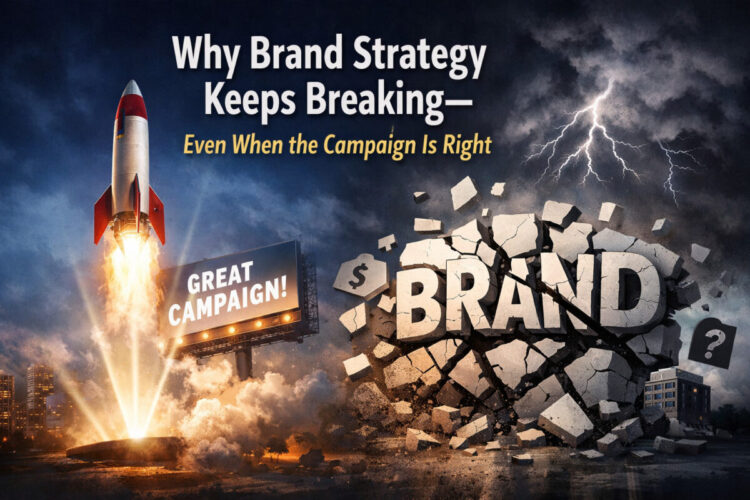
Because the strongest brands are not created by campaigns.
They are created by consistent decisions across the entire business.
Sources
Ailawadi, K. L., Lehmann, D. R., & Neslin, S. A. (2003). Revenue premium as an outcome measure of brand equity. Journal of Marketing, 67(4), 1–17. https://doi.org/10.1509/jmkg.67.4.1.18688
Boston Consulting Group. (2023). Rethink your brand marketing budget. https://www.bcg.com/publications/2023/rethink-brand-marketing-budget
Kantar. (2023). What if price—not volume—is your biggest growth opportunity? https://www.kantar.com/inspiration/brands/what-if-price-not-volume-is-your-biggest-growth-opportunity
Madden, T. J., Fehle, F., & Fournier, S. (2006). Brands matter: An empirical demonstration of the creation of shareholder value through branding. Journal of the Academy of Marketing Science, 34(2), 224–235. https://doi.org/10.1177/0092070305283356
Share