
From Campaigns to Constellations: A Structural Shift in Brand Strategy
From Campaigns to Constellations: A Structural Shift in Brand Strategy
For decades, brand strategy has been treated as a marketing problem.
When results lag, the instinct is predictable: refresh the messaging, clarify the positioning, launch a new campaign. The assumption is that if the story is compelling enough, everything else will fall into place.
But increasingly, it doesn’t.
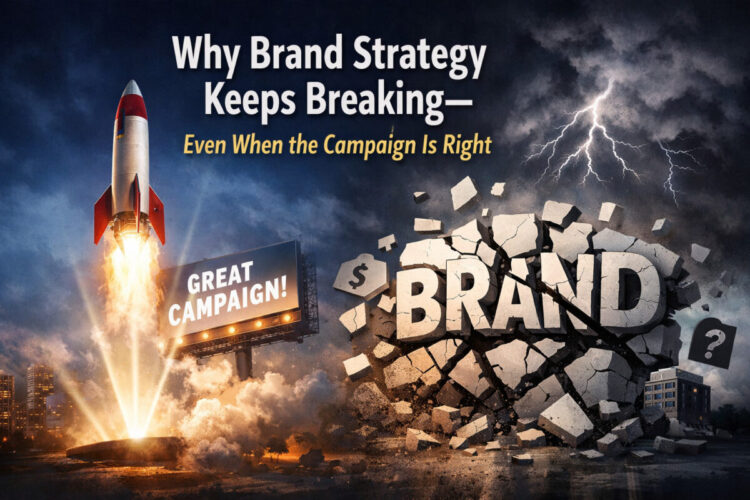
Brands invest more in marketing than ever, yet struggle with weak differentiation, price pressure, internal misalignment, and confused customers. The problem isn’t marketing effort. It’s brand structure.
Most brand strategies are built for a world that no longer exists.
The Campaign Mindset—and Its Limits
Traditional brand strategy is largely linear. It assumes that brand meaning is created by selecting the right message and delivering it across channels. Product, pricing, distribution, and internal behavior are treated as inputs to support the campaign.
This mindset made sense in a mass-media environment where communication was one-directional and tightly controlled. Brands spoke. Markets listened.
That world is gone.
Today, customers don’t encounter brands through a single narrative arc. They experience them through decisions: what’s offered, how it’s priced, where it’s available, how the company behaves, and how all of that compares to alternatives. These signals arrive simultaneously, not sequentially.
And people don’t interpret them one at a time.
They integrate them.
How Brand Meaning Actually Forms
When people think about a brand, they don’t recall a tagline and then reason forward. They recognize a whole. An object. A pattern of meaning that feels coherent—or doesn’t.
This matters because recognition is holistic. Customers don’t experience brands touchpoint by touchpoint. They experience brands as systems.
That means brand meaning is not created by campaigns alone. It emerges from the alignment—or misalignment—across the decisions an organization makes over time.
Messaging can amplify meaning, but it cannot create coherence where none exists.
This is where most brand strategies break down.
Fragmentation Is a Structural Problem, Not a Creative One
When brands feel “confused” in the market, it’s rarely because the message is unclear. More often, it's due to organizational decisions failing to support the same idea.
A product positioned as premium but priced tactically.
A company that claims customer centricity but designs for internal efficiency.
A bold category narrative undermined by conservative operational choices.
Each decision makes sense in isolation. Together, they fragment meaning.
The result is familiar: marketing works harder, sales cycles lengthen, teams argue about positioning, and leadership feels pressure to “do more branding.”
What’s missing is not activity. It’s alignment.
From Linear Thinking to Systems Thinking
This is where a structural shift is required.
Instead of treating brand as a linear process—strategy to message to execution—we need to treat brand as a system of meaning shaped by interconnected decisions.
This is the logic behind Brand Constellations.
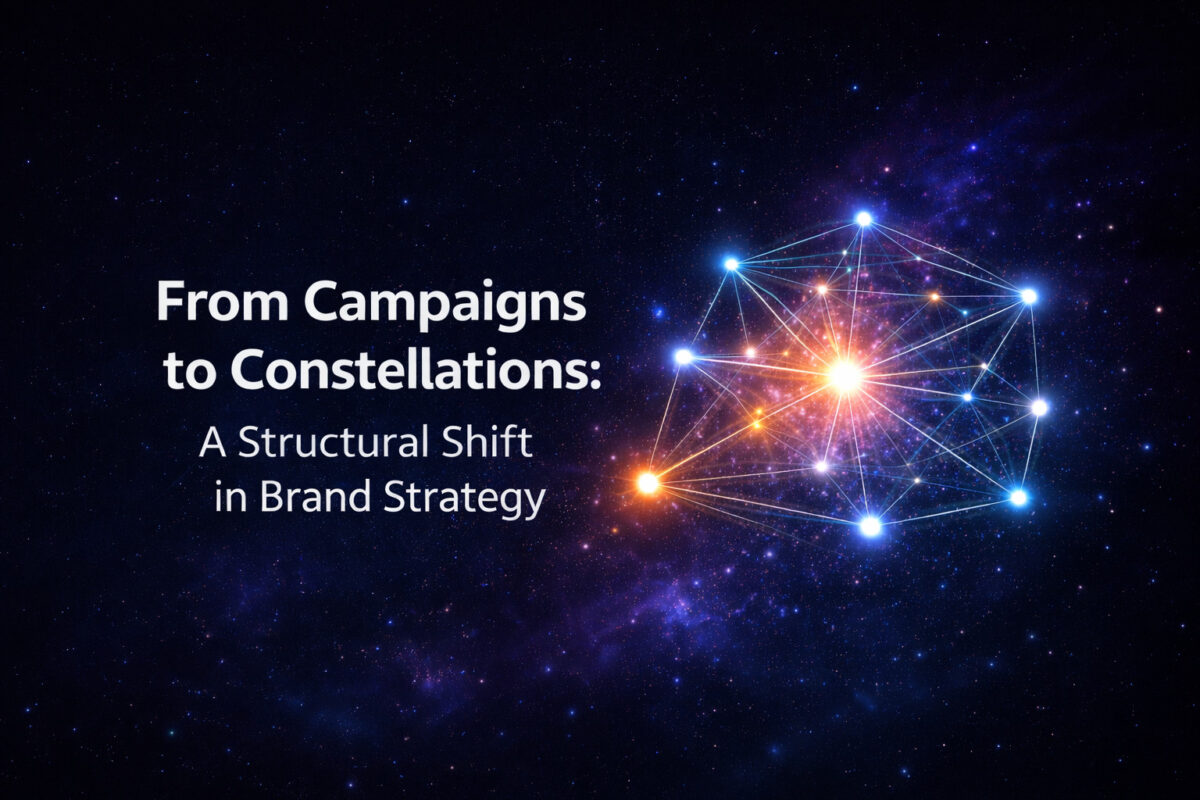
Rather than optimizing individual elements in isolation, Brand Constellations views brand as a whole formed by multiple sources of meaning operating together. Product, placement, pricing, promotion, category framing, competitive context, company behavior, and customer interpretation all contribute simultaneously.
No single element creates the brand. Meaning emerges from their interaction.
This is not a checklist. It’s a way of seeing.
Why Constellations, Not Campaigns
Campaigns are episodic.
Constellations are cumulative.
Campaigns assume control.
Constellations acknowledge interpretation.
Campaigns focus on what is said.
Constellations focus on what is reinforced.
In a constellation, strength doesn’t come from excellence in one area. It comes from coherence across many. When decisions reinforce the same underlying idea, the brand feels clear without explanation. When they don’t, no campaign can compensate.
This is why some brands feel inevitable, while others feel busy.
The Practical Implication for Brand Strategy
Adopting a constellation mindset changes the work of brand strategy fundamentally.
The core question is no longer:
“What should we say?”
It becomes:
“What is everything we do teaching the market?”
That shift moves brand upstream from communications to decisions, from marketing to leadership, from projects to systems.
It also explains why brand strategy cannot be owned by a single function (i.e., marketing). Brand meaning is shaped across the organization, whether intentionally or not.
Brand Constellations doesn’t add complexity. It reveals it and makes it manageable.
A Necessary Evolution, Not an Alternative
This is not about replacing creativity, storytelling, or execution. It’s about putting them in the right place.
Campaigns still matter. Messaging still matters. Promotion still matters.
But they work best when they sit downstream of aligned decisions, when they reflect a constellation that already makes sense.
In a fragmented market, coherence is the advantage.
In a noisy environment, alignment is the signal.
In a world of constant choice, meaning is the differentiator.
Moving from campaigns to constellations is not a trend.
It’s a structural response to how brands are actually perceived today.
And once you see brand this way, it becomes very difficult to unsee it.
Share